
Decarbonizing AI Data Centers
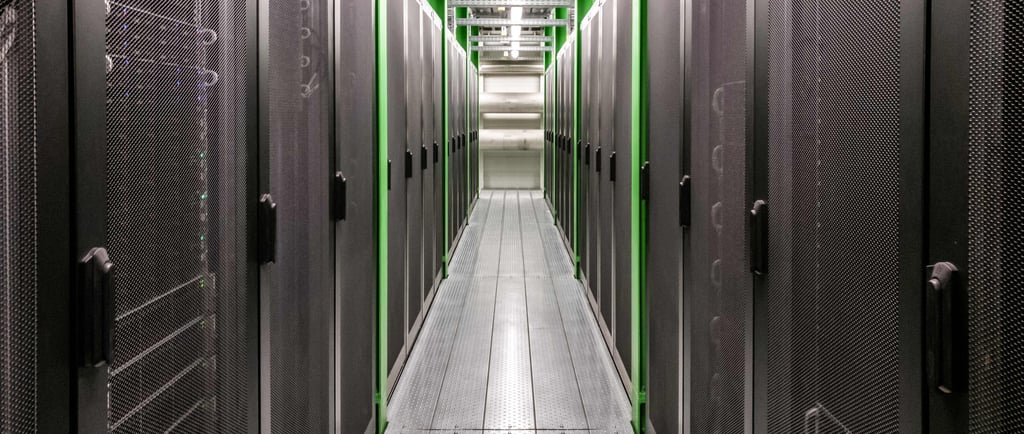
The AI boom is driving an unprecedented wave of data center construction — especially across APAC and the Middle East. Data centers are no longer just digital utilities — they are climate-critical infrastructure. What we build today will lock in emissions trajectories for decades.
The good news?
The energy transition is real. Grid greening, renewable PPAs, and efficiency metrics such as PUE are improving operational performance. Operational emissions (Scope 1 and 2) are increasingly visible, measurable, and manageable.
But here’s the uncomfortable truth: Operational emissions are only part of the story.
The Hidden Impact: Scope 3 & Embodied Carbon
For data centers, the largest emissions often sit in Scope 3 — across the full value chain:
Steel, cement, and structural materials
Semiconductor and GPU manufacturing
Frequent hardware refresh cycles increase embodied and e-waste emissions.
Cooling systems and backup infrastructure
Transport, construction, and end-of-life
Before a single server is switched on, massive embodied carbon is already locked into the asset. If we focus only on greening electricity, we risk building “efficient” but carbon-intensive infrastructure from day one.
If we embed Scope 3 accountability and embodied carbon intelligence now, we can:
Prevent stranded carbon assets
Align with evolving ESG and regulatory frameworks
Future-proof hyperscale investments
Accelerate genuine net-zero transitions
AI for Sustainable Data Centers - The paradox
AI is driving exponential data center growth. But AI can also be the solution.
Intelligent AI agents can enable:
Predictive lifecycle assessment (LCA)
Dynamic embodied carbon modeling during design
Supplier-level emissions intelligence
Real-time material selection optimization
Construction-stage emissions tracking
Circularity and reuse planning
This is where intelligent AI agents become transformative.
The next frontier is not just renewable energy — it is microscopic value-chain & lifecycle intelligence and AI can certainly ace it.
© 2026 MoruBld AI. All rights reserved.
MoruBld AI Pte. Ltd.
60 Paya Lebar Road
#06-28 Paya Lebar Square
Singapore 409051